Data Engineer & BI Developer
I build data pipelines, dimensional models, and reporting, mostly in Microsoft Fabric and Power BI. Eight years of data work for manufacturing and automotive clients means I know the domain as well as the tools.
Areas of Expertise
From data systems design to regulatory compliance frameworks
Data Architecture
Bill-of-Materials and supply-chain data shaped into fact and dimension tables you can slice by part, supplier, and region.
See the modelsBI & Reporting
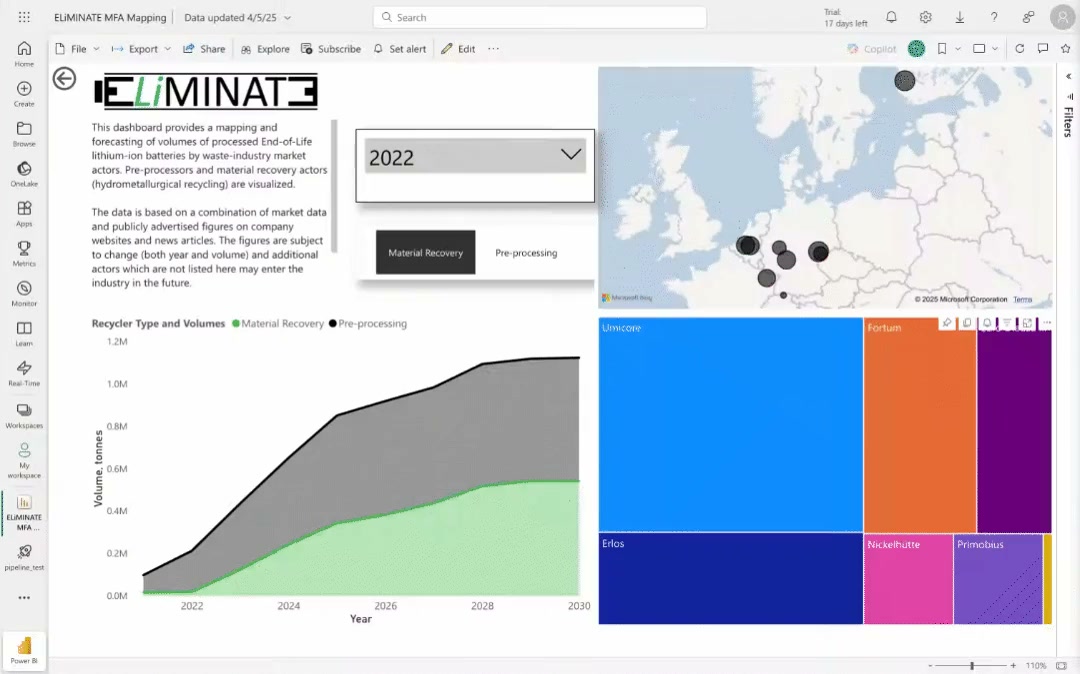
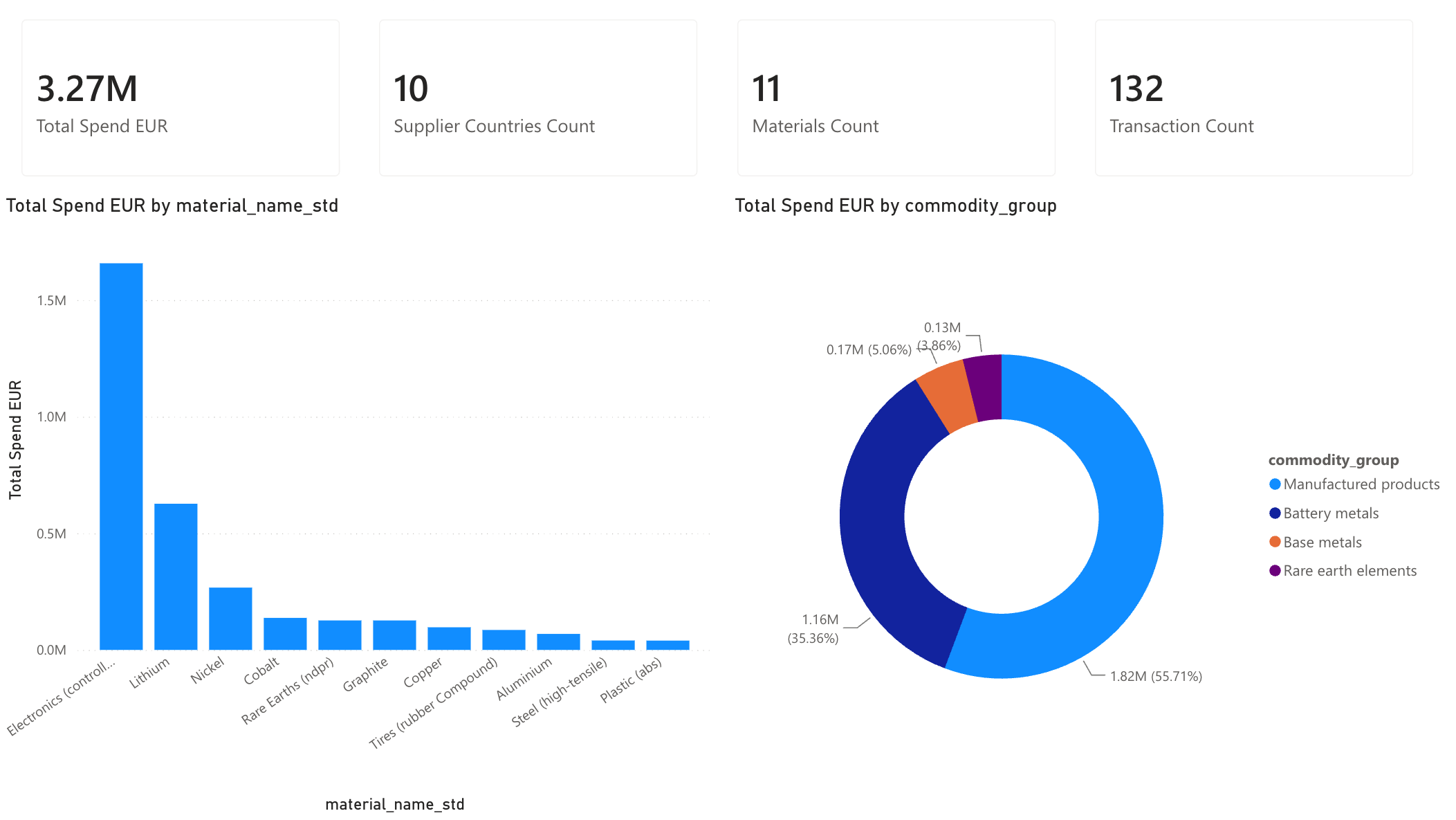
Power BI dashboards and semantic models that let procurement, risk, and strategy teams slice supply-chain data themselves.
See the reportingPipelines & Transformation
Layered, refreshable pipelines in Power Query and PySpark: typed functions, config-driven parameters, and validation that fails fast on bad input.
See the pipelinesFeatured Work
Data pipelines, dimensional models, and BI
Hi, I'm Erik.
I'm a Data Engineer and BI Developer based in Gothenburg, Sweden. I spent eight years on consultancy and research projects in industry, working with product, chemical and materials data, from substance compliance to a battery recycling network model in Python. It taught me how industrial organizations work and what their data really looks like.
More about me